Fahrenheit-182 (2025) Review -Mark Hoppus Grows Up, Looks Back on Blink-182, and Tells the Truth


I think for a lot of people, Blink-182 were a phase of life.
For me, they were burned CDs, house parties, guitars, basements, garages, and hanging out with my friends. I see now, they were a band I blasted when I was too young to fully understand what adulthood would mean, but old enough to feel that something was coming. What's my age again?
Fans here may have expected tour chaos, juvenile humor, backstage stories, and a victory lap through the pop-punk’s most commercially successful era.
They do get some of this. But also something much better — and heavier.
This isn’t a book about staying young forever. It’s a book about surviving long enough to look back honestly.

Fahrenheit-182: A Memoir

Why should you care about Mark Hoppus and Blink-182?
A little background if you don't already know:
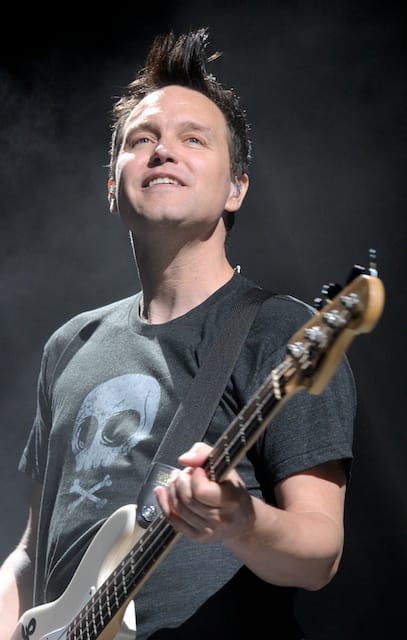
Mark Hoppus is the bassist/vocalist of pop-punk Blink-182.
The band’s breakout Enema of the State (1999), came powered by massive singles like “What’s My Age Again?” and “All the Small Things.”
As Blink-182 evolved, Hoppus took on an increasingly central creative role, particularly after drummer Travis Barker joined the band. The group went on to sell 50 million albums worldwide.
When Blink-182 reunited in 2009, Hoppus returned as a driving force behind albums like Neighborhoods (2011) and later releases, helping guide the band through some lineup changes and shifting musical landscapes.
Outside of blink-182, Hoppus has worked as a producer, collaborator, and media personality. He hosted the influential MTV show Hoppus on Music, and a weekly music talk show on Fuse TV called Hoppus on Music.
In a viral clip, Ozzy Osbourne appeared as a guest on the show. In that interview, Mark Hoppus asked him about what music he listens to today — specifically asking Ozzy if he listens to Justin Bieber.
 Jeff
Jeff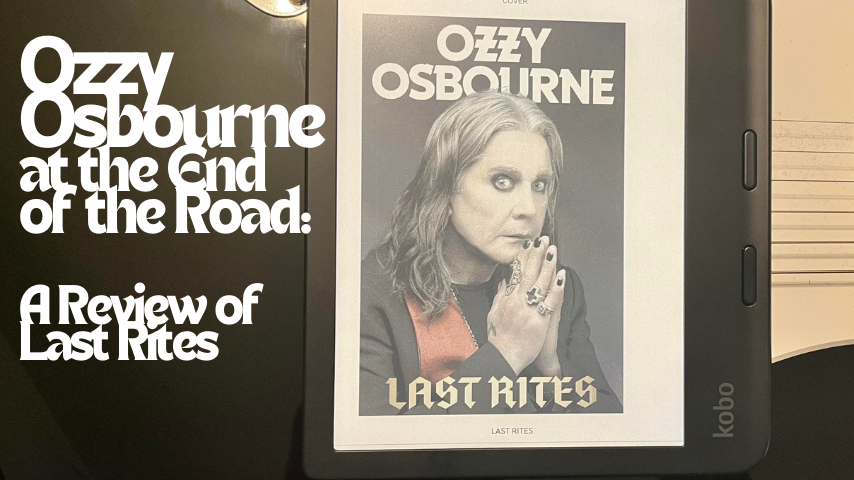
Ozzy Osbourne: "Who The F is Justin Bieber?"
In 2021, Hoppus publicly revealed his battle with diffuse large B-cell lymphoma. He announced he was cancer-free later that year.
His memoir, Fahrenheit-182 was released on April 8, 2025.

This Is Not the Blink-182 Joke Book You Might Expect
Let’s get this out of the way early: Fahrenheit-182 is not a blink gag reel.
Yes, the humor is there. Hoppus still writes like a guy who spent decades cracking jokes into microphones. But this book is far more reflective than ridiculous. If anything, the jokes act as pressure valves — brief moments of levity before the story digs into things Blink-182 never sang about directly.
Fear. Regret. Illness. Loneliness. Aging.
Hoppus doesn’t posture as a punk hero or rewrite history to make himself look better. He’s comfortable admitting confusion, insecurity, and moments where success didn’t bring clarity.
For readers expecting a fast, shallow nostalgia hit, this book may come as a surprise. For readers willing to sit with it, it lands much deeper.
"I should’ve taken the lessons. Decades later, I still have terrible technique. I’m a solid bassist and proud of where it’s taken me, but I’ll never be one of those musicians who wears it up underneath their chin and runs scales all over the place. I guess I never wanted to be a bassist. I wanted to be a dude in a band. My friends and I against the world. Like a Ramone." -Mark Hoppus, Fahrenheit-182
Growing Up Punk, One Band at a Time
One of the strengths of Fahrenheit-182 is how grounded Hoppus’ early life feels. There’s no myth-making here. Just a kid moving around, trying to figure himself out, drawn to music as a way to make sense of everything else.
"Our living room cabinet held a turntable and a big stack of records. I used to lie on the thick shag carpet for hours, listening to albums by the Beatles, Neil Diamond, Diana Ross, John Denver, and Michael Jackson (I can say that, right?). Elton John and Simon and Garfunkel. Stevie Wonder, Olivia Newton-John, and the Bee Gees. Donna Summer, Barry Manilow, and Kenny Rogers." -Mark Hoppus, Fahrenheit-182
The formation of Blink-182 isn’t treated as fate — it’s treated as luck mixed with persistence. Bands formed. Bands failed. Lineups shifted. Songs got written. Vans broke down. It’s the messy, unromantic reality of building something from nothing.
When Blink finally clicks, it doesn’t feel like a miracle. It feels like momentum.
Hoppus makes it clear that none of them were fully prepared for what that acceleration would cost.
"I loved every second of being on tour. Everywhere is home and nowhere is home, just like it was growing up. I even loved the hard parts. Typically, our nightly guarantee was listed as “$50 plus possible bonus.” (There was never a bonus.) We’d take our payment, calculate how many miles we needed to drive, subtract gas money from that amount, and hit the Taco Bell drive-thru with the rest" - Mark Hoppus, Fahrenheit-182
Enema of the State and the Cost of Going Nuclear
The Enema of the State era looms large over the book, as it should. This is where Blink-182 stops being a band and becomes a cultural force.
Suddenly they’re everywhere — radio, MTV, magazines, arenas. The songs get bigger. The expectations get heavier.
What Fahrenheit-182 does well is strip away the mythology of “making it.” Hoppus doesn’t pretend that success fixed anything internally. If anything, it amplified existing cracks.
There’s a recurring tension in the book between gratitude and overwhelm. He knows how lucky they were.
Blink-182 became symbols of arrested development — and then had to live inside that image as they aged.
That contradiction fuels much of the book’s emotional weight.
"blink was growing so fast it hardly seemed real. It took Dude Ranch eight months to sell half a million copies. In Enema’s first eight months, it sold five million. To help us navigate these uncharted waters, we hired seasoned tour managers who had experience managing giant acts—Nirvana and Pearl Jam. Top industry professionals took care of us. We felt like big shots. We were really famous now." –Mark Hoppus, Fahrenheit-182
Brotherhood, Breakups, and the Long Shadow of Tom DeLonge
Any honest Blink-182 memoir has to deal with the complicated relationship between Mark Hoppus and Tom DeLonge — and Fahrenheit-182 doesn’t dodge it.
Hoppus doesn’t position himself as the reasonable one or the wronged one. He presents the relationship as it was: intense, creative, frustrating, and deeply personal.
Bands don’t break up because of one argument. They fracture under years of mismatched expectations, communication failures, and unspoken resentment. Hoppus captures that slow erosion well.
The Blink breakups aren’t framed as dramatic betrayals. They’re framed as exhaustion.
Creative differences get heavier when you’ve shared everything. Distance feels sharper when your bandmates are also your closest friends. By the time Blink fractures, it feels inevitable — and tragic in a quiet, adult way rather than a tabloid one.
"Tom kept saying he wanted to go home, that he needed time off. Okay, time off. Yes, we all need to rest. We all need a break. Maybe we take time off the road and start writing the next album. No. Tom didn’t want to even think about blink-182. Okay, but . . . for how long? Tom could only guess: “A year, maybe?"
Fame Doesn’t Protect You From Yourself
Despite selling millions of records and playing massive shows, he never writes like someone who feels permanently secure. There’s a persistent questioning of worth, relevance, and identity that runs through the book.
What happens when the thing that defined you starts slipping out of reach?
What happens when the scene you helped build moves on without you?
These aren’t punk rock questions — they’re middle-aged ones. And that’s exactly why the book works.

Cancer Changes the Temperature of Everything
The emotional center of Fahrenheit-182 is Hoppus’ cancer diagnosis — and it’s handled with remarkable restraint.
There’s no melodrama. No inspirational monologue. Just fear, uncertainty, and a sudden confrontation with mortality that cuts through decades of bravado.
Hoppus writes about treatment, vulnerability, and the mental toll of not knowing what comes next in a way that feels raw but controlled.
You don’t need to be a Blink-182 fan to understand this part. Anyone who has faced serious illness — personally or through someone they love — will recognize the emotional landscape immediately.
"A few days earlier, I was a free man, open to the possibilities the newly reopened world had to offer. And now I was a human pincushion. I definitely wasn’t Mark from blink-182 anymore. I was a patient. A number. A case. I was the member of the herd that was about to get thinned. - Mark Hoppus, Fahrenheit-182
Reconciliation, Perspective, and Survival
Without spoiling the arc, Fahrenheit-182 ultimately becomes a book about reconciliation — with band mates, with the past, and with oneself.
Hoppus doesn’t present healing as neat or permanent. Relationships don’t magically reset. Old wounds don’t vanish.
Blink-182’s later chapters are written with maturity rather than triumph. There’s appreciation for what the band meant, what it still means, and what it can never be again. That honesty is refreshing in a genre that often mistakes reunion for resolution.
Sometimes survival is the victory.
"blink-182 will always be Mark, Tom, and Travis. Maybe I knew it, too, even when I didn’t." -Mark Hoppus, Fahrenheit-182
 rockreads
Why Fahrenheit-182 Matters
This book matters because it reflects what happens when the kids who grew up on pop-punk grow up themselves.
It acknowledges that the music didn’t lie — it just didn’t tell the whole story. The jokes were real. The energy was real. But so were the costs that came later.
Hoppus gives voice to a generation that is now balancing nostalgia with responsibility, humor with reflection, and youth with the reality of aging bodies and complicated lives.
Fahrenheit-182 isn’t about clinging to the past. It’s about carrying it forward honestly.

Final Verdict
Fahrenheit-182 is thoughtful, vulnerable, and surprisingly heavy in the best way.
Mark Hoppus doesn’t try to mythologize Blink-182. He humanizes it.
I loved that the book was filled with photos starting from his childhood, first bands, success with blink, and his cancer fight.
Rating: 4.5/5