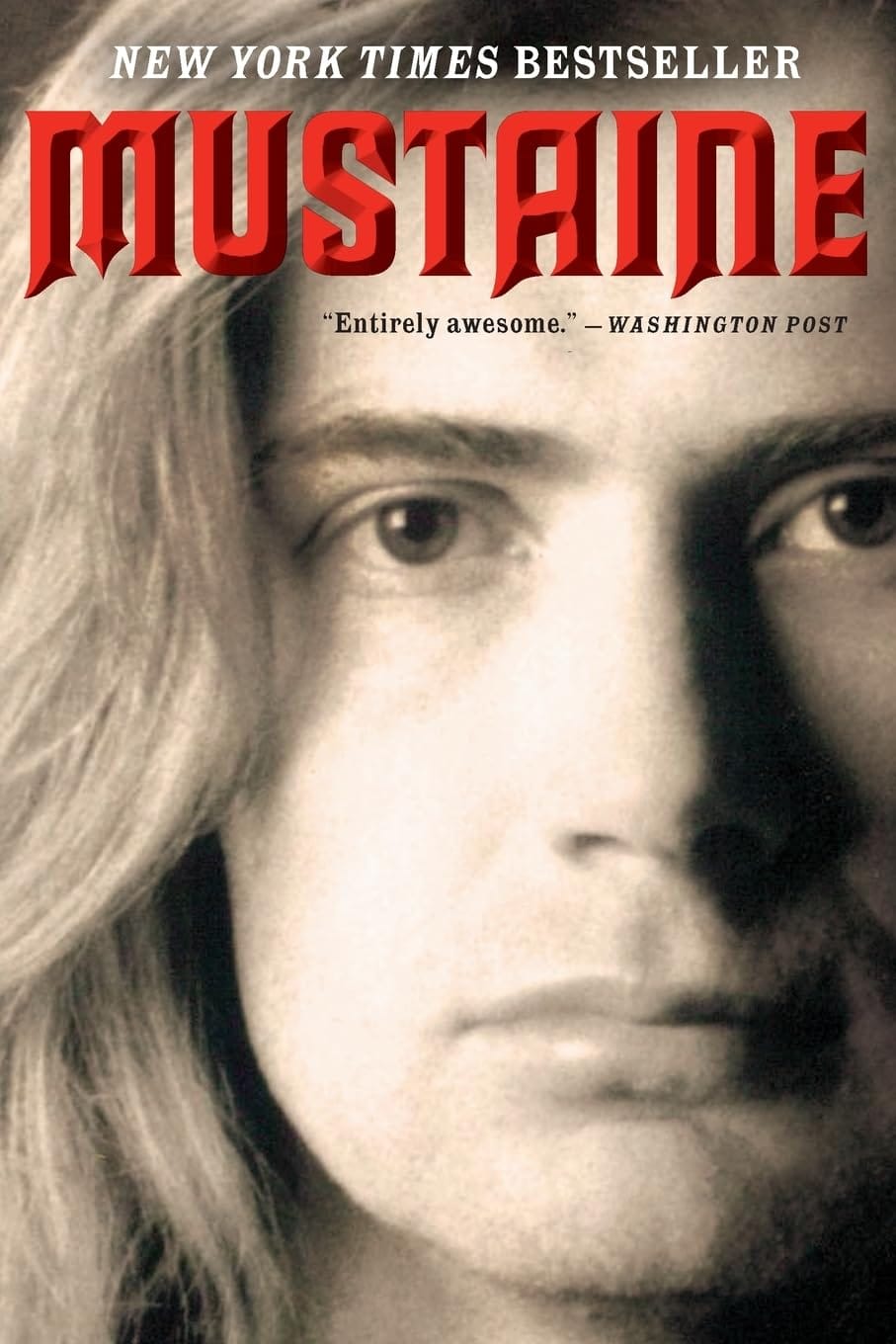
Mustaine: A Heavy Metal Memoir (2010) Book Review - Riffs, Rivalry, and Redemption


Few figures in heavy metal have lived a life as turbulent, determined, and relentlessly driven as Dave Mustaine.
In Mustaine: A Heavy Metal Memoir, the founder and frontman of Megadeth tells the story of a career defined as much by exile and redemption as by speed riffs and technical precision.
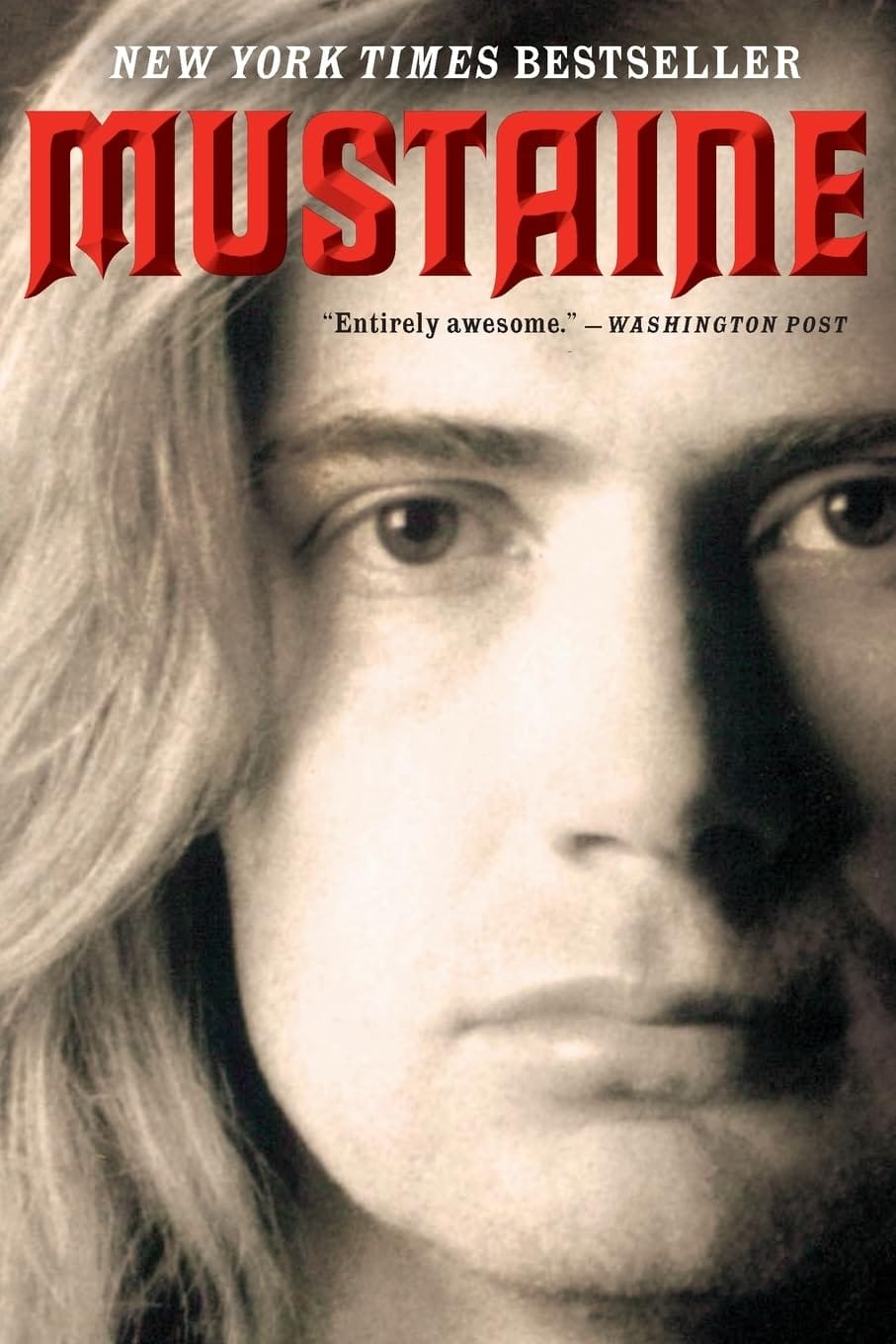
Mustaine: A Heavy Metal Memoir (2010)
From its opening pages, the book establishes a tone of honesty. Mustaine does not attempt to present himself as a hero polished for public approval. He readily acknowledges his flaws — volatility, substance abuse, impulsiveness, resentment — and the ways those traits both propelled and sabotaged his career.
“I didn’t have a drug problem — I had a police problem. Every time I got into trouble, it just happened that the police were involved.”
Much of the early portion of the memoir focuses on Mustaine’s formative years, a period marked by instability, financial hardship, and a constant search for belonging.
Music became both an escape and a weapon — a way to assert control in a life where control often seemed unavailable. His early fascination with guitar reflects not only artistic curiosity but a desire for mastery, for something that could not be taken away.
“Once I started playing guitar, I became obsessed. I practiced constantly, pushing myself to get faster, cleaner, and more precise than anyone else around me.”

Metallica
Inevitably, the memoir devotes significant attention to Mustaine’s time with Metallica, a band he helped shape in its earliest days before being abruptly dismissed in 1983.
Few events in metal history have generated as much speculation and emotional residue as Mustaine’s departure from Metallica, and the memoir offers his perspective with clarity and lingering intensity.
Rather than gloss over the circumstances, Mustaine examines the volatile chemistry between himself and bandmates James Hetfield and Lars Ulrich. He describes a competitive atmosphere fueled by youth, alcohol, ego, and the desire to push metal into faster, heavier territory.
“At that stage of our lives, the band was everything. Our friendships were built around the shared goal of becoming great musicians.”
Mustaine’s contributions to Metallica’s early sound are undeniable, yet the memoir also reveals how his unpredictable behavior made long-term collaboration difficult. The now-legendary bus ride home after being fired serves as one of the emotional anchors of the book. Mustaine frames the moment as both devastating and galvanizing.
"I remember sitting there thinking about everything that had happened — the music, the friendship, the dream we had shared. I felt angry, betrayed, and completely determined that I was going to succeed, no matter what it took. That bus ride became a turning point for me. I decided that I would form a band that would be faster and heavier, and that I would prove to everyone, especially them, that they had made a mistake.”
The relationship between Mustaine and Metallica remains a recurring theme throughout the book. The memoir acknowledges the persistent comparisons between the two bands, comparisons that have shaped public perception of Mustaine’s legacy. Rather than dismissing Metallica’s success, Mustaine presents his own career as evidence that artistic validation need not depend on mainstream dominance. Megadeth achieved significant commercial success in its own right, earning Grammy recognition and a dedicated global fan base.

Megadeth
A band conceived almost as an act of defiance. Mustaine did not merely want to continue making music — he wanted to surpass his former band mates. The early years of Megadeth were marked by instability, lineup changes, and the chaotic lifestyle associated with the 1980s metal scene. Yet they were also characterized by a remarkable creative output that helped define thrash metal as a genre. Albums such as Killing Is My Business… and Business Is Good! and Peace Sells… but Who’s Buying? demonstrated a level of technical sophistication that distinguished Megadeth from many of its contemporaries.
I poured everything I had into Megadeth. Every riff, every lyric, every performance came from a desire to prove that I could build something great on my own terms.”
Behind the Scenes
For fans of Megadeth, the memoir provides behind-the-scenes context for songs that have become genre staples. Understanding the personal circumstances surrounding particular albums adds depth to the listening experience. Yet the book remains accessible to readers unfamiliar with thrash metal, as its themes extend beyond genre boundaries. Ambition, rivalry, reinvention, and redemption are universal narratives that resonate regardless of musical preference.
Mustaine’s description of the songwriting process reveals a perfectionist mindset that bordered on obsession. His commitment to precision extended beyond musical technique to encompass thematic complexity, political commentary, and lyrical sharpness. He presents himself as someone unwilling to compromise on artistic standards, even when such rigidity strained relationships with bandmates. This uncompromising approach became one of Megadeth’s defining characteristics, producing music that appealed to listeners seeking intensity combined with intellectual edge.
“A great riff has a life of its own. Once you find one, the rest of the song begins to take shape around it.”
Legacy
In evaluating Mustaine: A Heavy Metal Memoir, it becomes clear that the book succeeds in that Mustaine emerges as neither villain nor saint, but as an artist continually negotiating the tension between ego and self-awareness. His story illustrates how creative drive can coexist with personal struggle, producing work that resonates precisely because it reflects real conflict.
“Sometimes the only difference between confidence and arrogance is whether you’ve actually succeeded yet.”
Musically, the memoir provides valuable insight into the development of thrash metal during the 1980s and 1990s. Mustaine situates Megadeth within a broader movement that included bands pushing speed, aggression, and technical skill beyond previously accepted boundaries. He emphasizes the importance of innovation, suggesting that thrash emerged not only as a stylistic shift but as a cultural statement rejecting complacency.

Ultimately, the memoir stands as a testament to endurance. Decades after his departure from Metallica, Mustaine remains a central figure in heavy metal, demonstrating that artistic relevance can persist even when initial opportunities collapse. His journey underscores the importance of self-definition in industries prone to comparison. Rather than allowing early rejection to dictate his legacy, Mustaine built an alternative path characterized by technical innovation and relentless determination.
Rating: 3.5/5