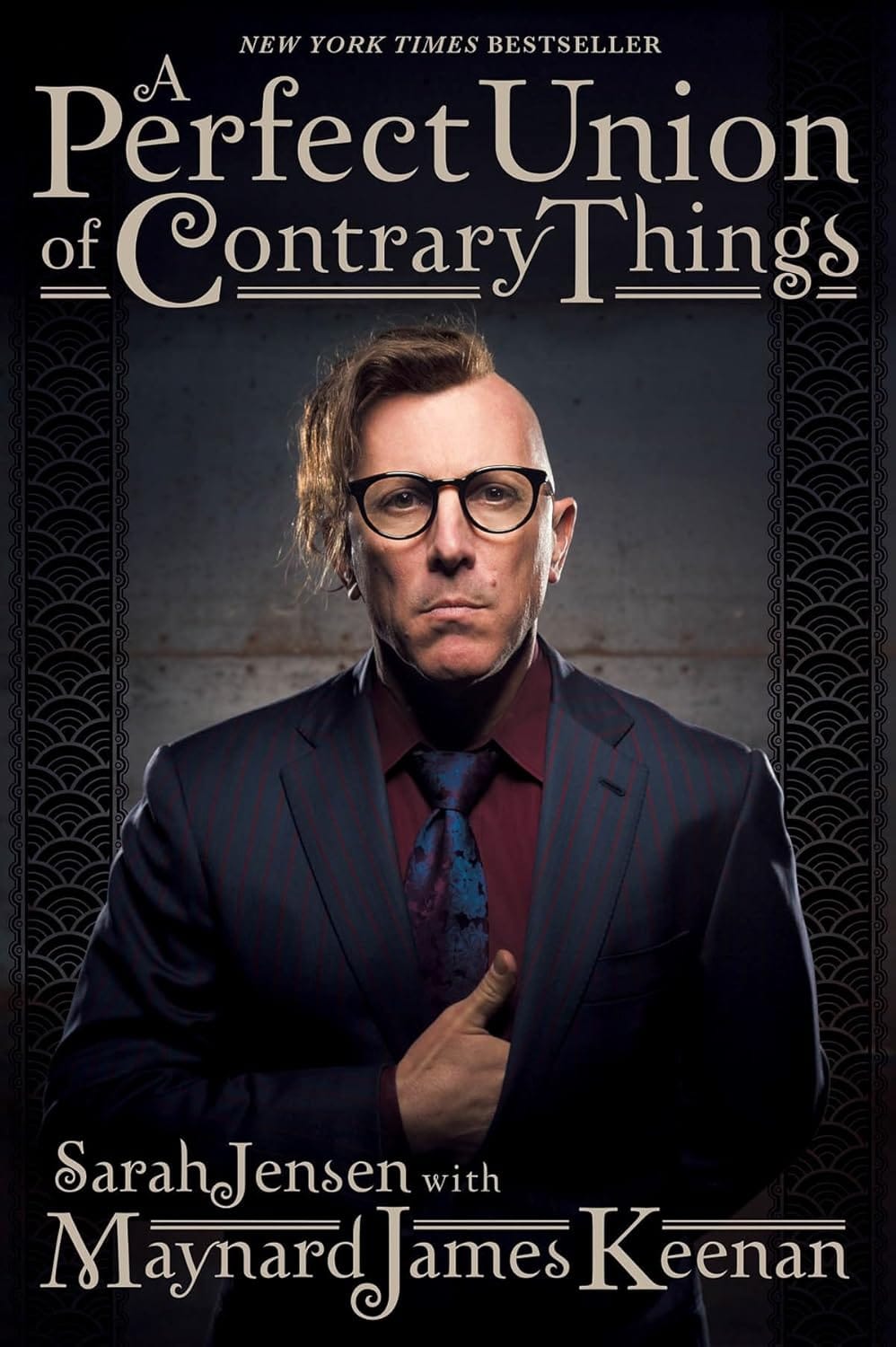
A Perfect Union of Contrary Things (2016) Book Review - Tool's Maynard James Keenan and the Myth of Genius

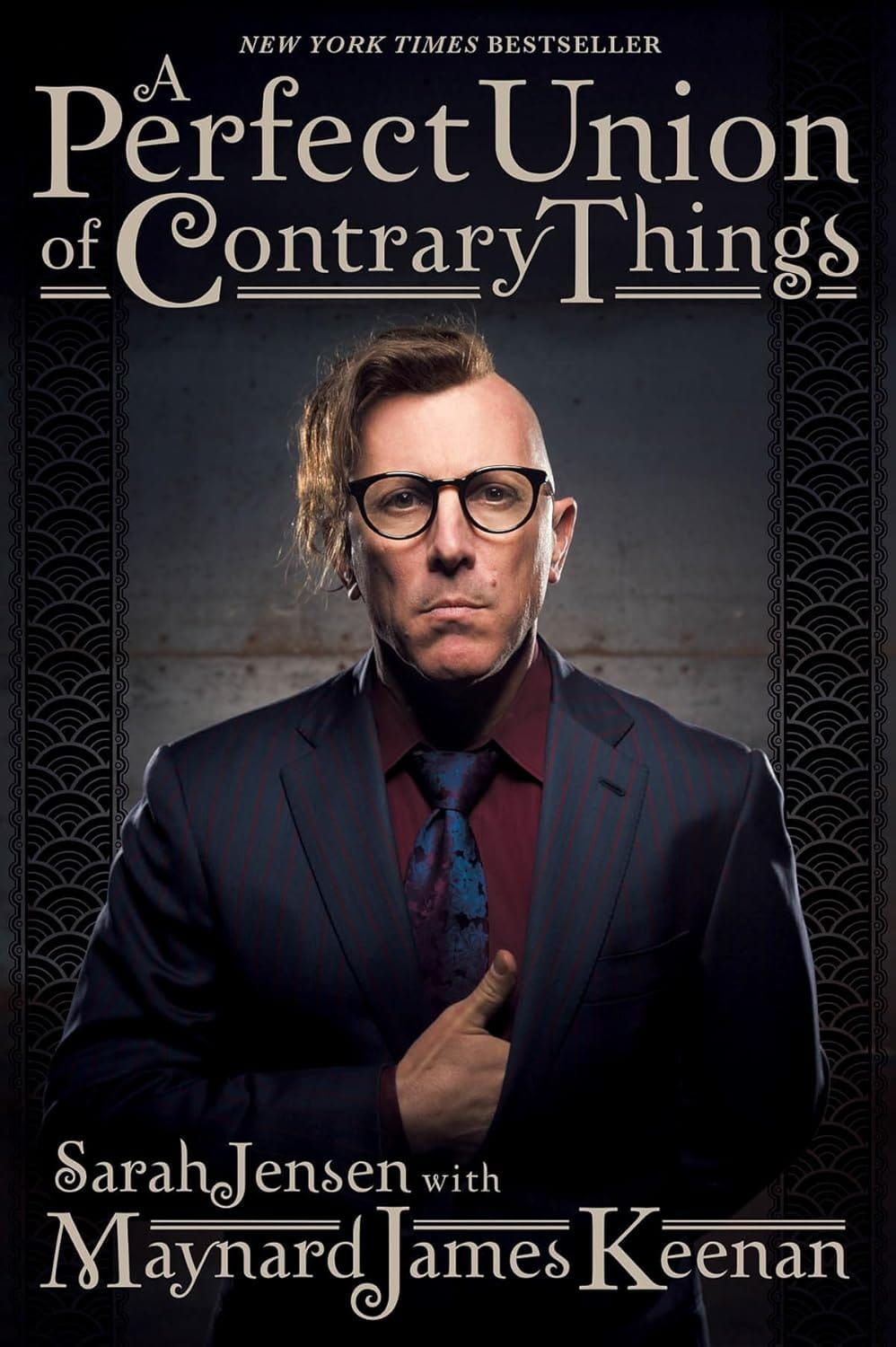
There are rock memoirs that exist to build the myth, and there are rock memoirs that exist to tear it down brick by brick.
A Perfect Union of Contrary Things (2016) does something more unsettling: it replaces the myth with something colder, stranger, and more human. This is definitely not a book about Tool or A Perfect Circle.
It is a book about Maynard James Keenan's systems—family systems, belief systems, creative systems—and about a man who has spent his life trying to survive contradiction.
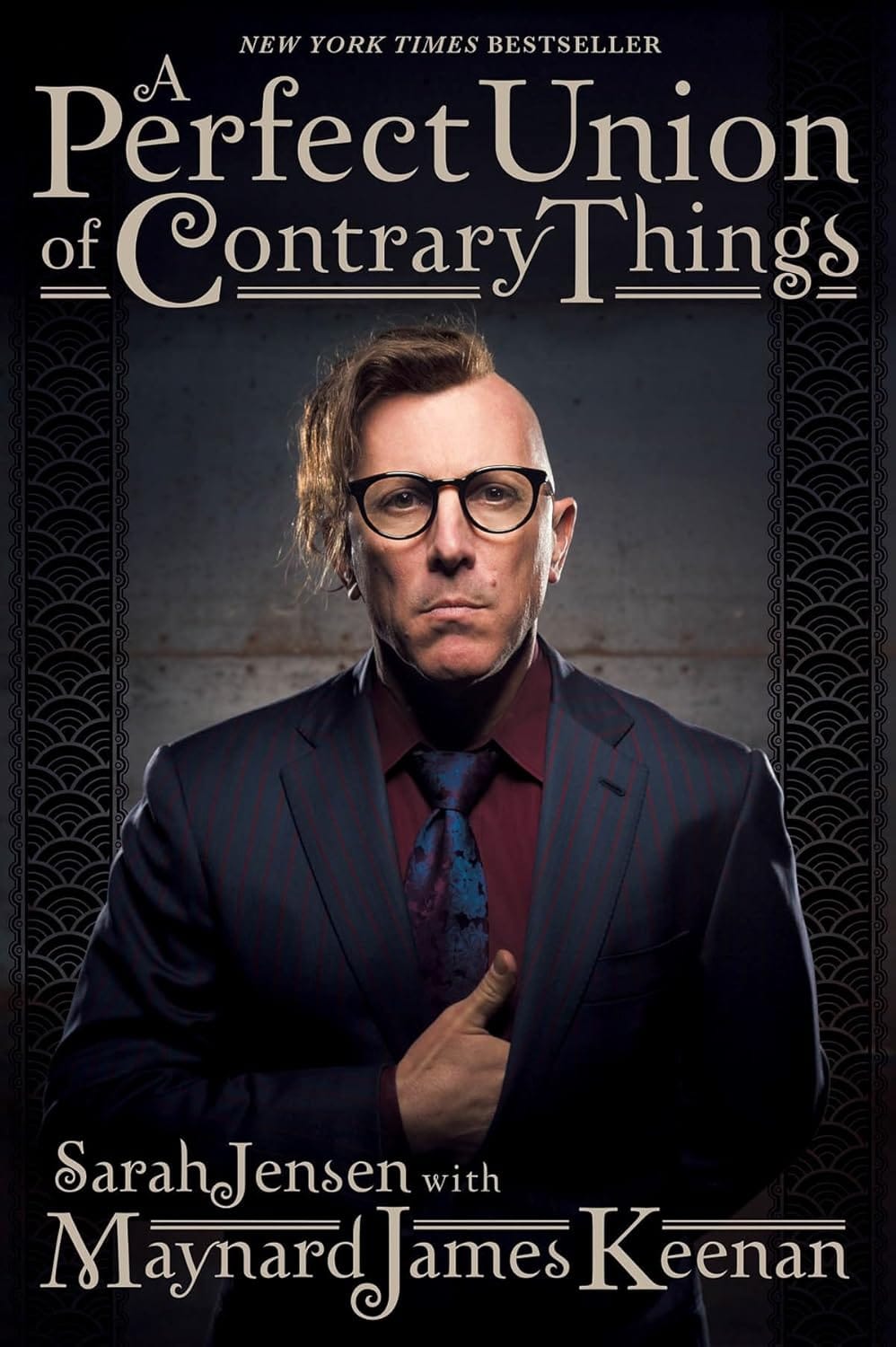
A Perfect Union of Contrary Things (2016)
No Origin Myth
Keenan’s childhood in Ohio is presented here without sentimentality. He speaks about his family, his childhood experiences, and how those things slowly molded him.
What’s striking is how early Keenan internalizes the idea that self-reliance is non-negotiable. There is no fantasy here about being saved by art, teachers, or chance encounters. The message is blunt: no one is coming to rescue you, so you’d better learn how to build something.

The Military, Discipline, and the Anti-Rock Star
Keenan’s time in the U.S. Army is one of the most misunderstood parts of his persona, and the book makes it clear why: it doesn’t fit the standard rock mythology.
Military life wasn’t an detour before art—it was a foundation for it.
Where most rock memoirs frame discipline as an enemy of creativity, Keenan argues the opposite. Systems create freedom. Structure enables risk. Control allows experimentation. This mindset runs directly counter to the romantic image of the reckless, instinct-driven artist, and Keenan seems almost amused by how often that myth collapses in real life.
What emerges is a portrait of an artist who doesn’t trust inspiration. Inspiration is unreliable. Systems are not. Whether it’s physical training, songwriting, or his later winemaking, Keenan approaches creativity like logistics: plan thoroughly, execute cleanly, evaluate without ego, repeat.
The Early Days
His early music days and relationship with Rage Against the Machine guitarist Tom Morello were interesting. Watching two bands forming on the cusp of doing something special.
“There was sort of in the air an idea of us working together,” Tom would recall. “Brad and I had been jamming with both Maynard and Zach de la Rocha. We really liked playing with both of them, and Brad and I had this long phone call to discuss who we should ask to the dance.”
In the end, rapper de la Rocha proved to be the most logical partner" - Tom Morello, Rage Against the Machine
Tool Without the Cult of Genius
When Tool finally enters the narrative the band is not framed as destiny fulfilled but as a solution to a problem: how to create something without surrendering autonomy.
"Maynard spoke the word aloud, whispered it, sketched it in his notepad. It was a fine name for a band, they all agreed, a name with pleasing mouth feel and eye appeal, its elongated open vowels bounded by sturdy consonants. A one-syllable name that left room for interpretation. A hard-to-forget name. A solid name. Tool."
Tool works not because of some genius but because of clearly defined roles, boundaries, and mutual respect for process. The band’s notorious slowness, perfectionism, and refusal to explain itself aren’t quirks—they’re policies. Keenan refuses to center himself as the visionary nucleus. He consistently redirects credit toward the collective, often downplaying his own role.
"Early reviewers were at a loss when it came to categorizing the band’s music, calling it everything from grunge to metal to alt, but the audience didn’t trouble itself with labels. Tool’s was music that mattered, whatever its genre."

Fame as Contamination
One of the book’s strongest points is Keenan’s suspicion of fame— as a distorting force.
"The band’s name was as much in demand as its music. Social justice organizations and environmentalist groups seemed to believe that if their fund-raising events included a Tool performance, contributions would roll in and the rain forests would be saved, political prisoners freed, and puppies in South America rescued from starvation." - Maynard James Keenan, A Perfect Union of Contrary Things (2016)
Keenan never pretends to be immune to it. Instead, he treats fame like radiation: manageable in small doses, fatal with prolonged exposure. His solution is distance—geographical, emotional, and psychological. Arizona isn’t an aesthetic choice; it’s an escape.
Wine, Land, and Control
The sections on his winemaking reinforced the book’s central thesis: creativity thrives where control meets uncertainty.
Wine is farming plus patience plus failure. You can do everything right and still lose. For Keenan, that’s the point. Unlike music, which can be endlessly revised, wine demands surrender at the final stage. The grapes will become what they become.
There’s something quietly profound in watching a man known for obsessive control willingly engage in a process that resists it. This is not a retreat from art—it’s an expansion of it.
What This Book Is—and Isn’t
A Perfect Union of Contrary Things is not a fan service memoir. It’s not a tell-all. It’s not even particularly interested in entertainment.
The book argues—quietly but relentlessly—that adulthood is not about becoming whole. It’s about becoming functional without lying to yourself. Faith and skepticism. Control and surrender. Art and commerce.
Final Verdict
If you come to this book hoping for studio gossip, band drama, or a decoding of Tool’s lyrics, you’ll leave disappointed.
If you come willing to sit with the idea that creativity is not a gift but a byproduct of relentless structure, A Perfect Union of Contrary Things quietly becomes one of the most honest rock biographies I've read.
It strips away the romance of suffering, the mythology of genius, and the lie that creativity is chaos.
For Tool fans, this book will feel evasive. For readers interested in how art actually gets made—and sustained—it’s essential.
Final Rating: 3.5/5