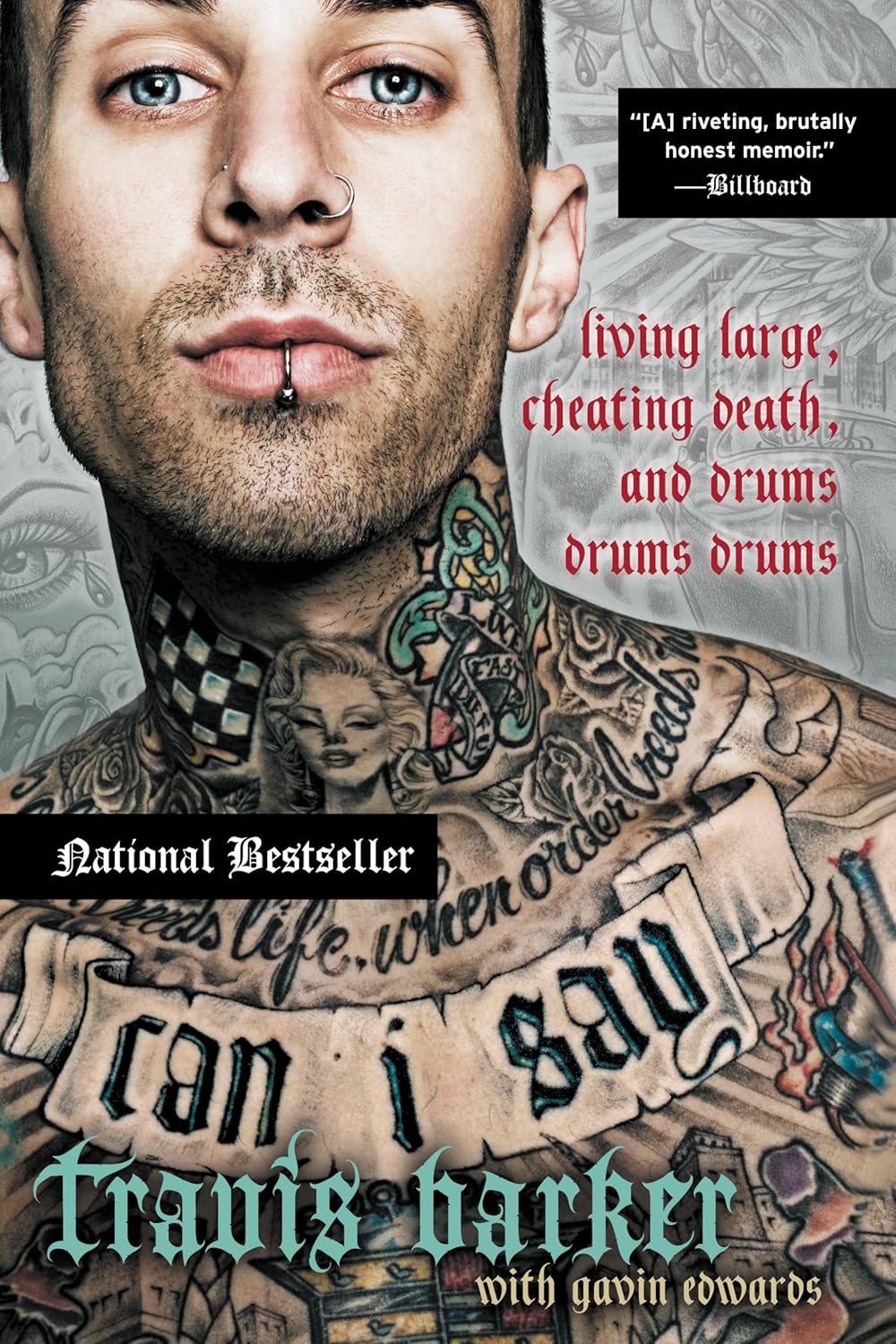
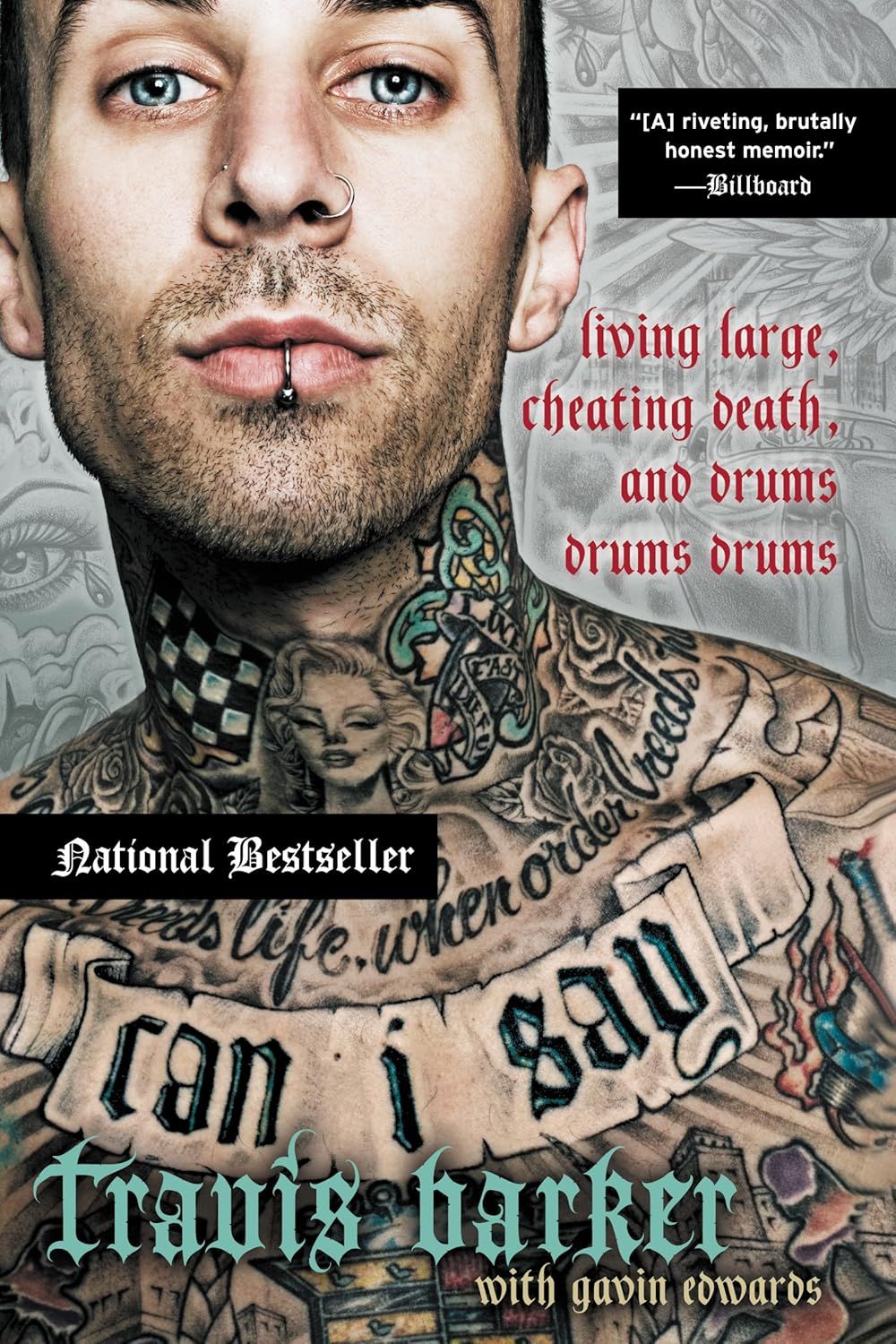
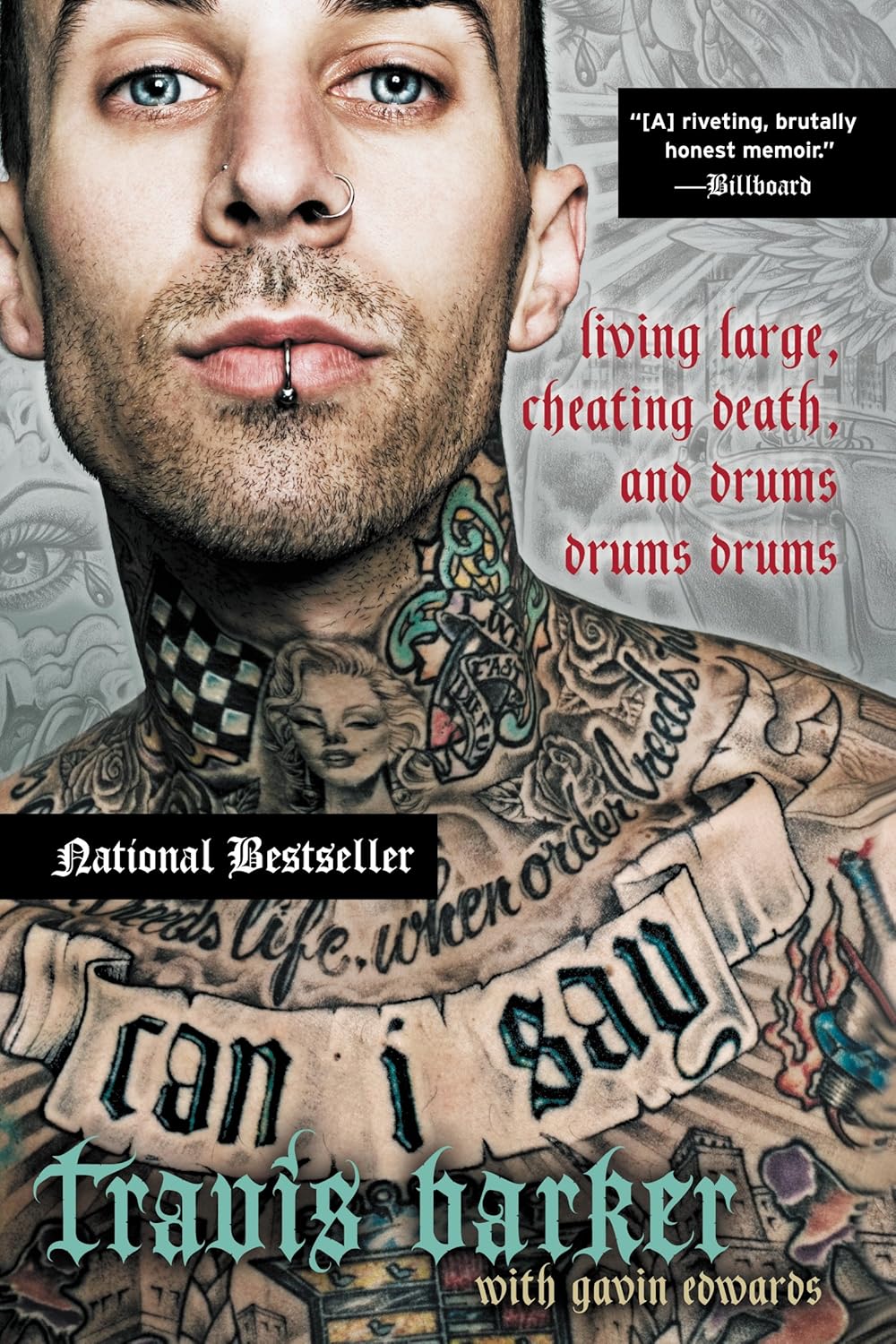
Can I Say: Living Large, Cheating Death, and Drums, Drums, Drums (2015) Book Review - Blink-182's Travis Barker on Life, Loss, and Survival

There are rock memoirs that feel carefully edited, smoothed down, and sanded clean.
This book doesn’t sand anything. It leaves the edges sharp and the wounds open.
It’s the story of a kid from California who grew up and found salvation behind a drum kit, and somehow lived long enough to become one of the most influential drummers of the modern era.
If you’re coming to this book expecting a Blink-182 nostalgia trip full of dick jokes and tour stories, there is some of that. Can I Say can be a bit darker than that.
More compulsive. And, at times, genuinely uncomfortable.
Why should we care about Travis Barker?
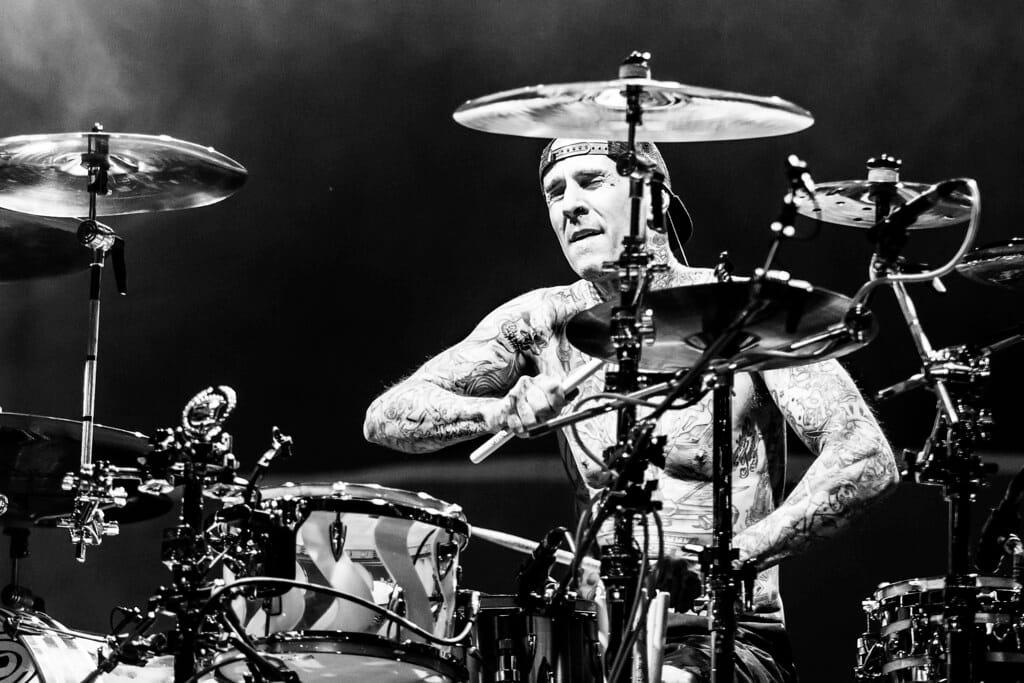
Born in 1975 in Fontana, California, Barker grew up in a working-class family. He started drumming at four, trained in the marching band, and developed a hybrid style that fused punk aggression with hip-hop swing and technical finesse. That combination would become his signature—and eventually reshape what a “punk drummer” could be.
"Animal. He was pure primitive orange insanity, and he was my hero. He would go buck wild, play an awesome drum solo, and then eat his cymbals. The first time I saw Animal on The Muppet Show, I wanted to eat my cymbals. I wanted to be a drummer. I was four years old." - Travis Barker, Can I Say: Living Large, Cheating Death, and Drums, Drums, Drums (2015)
Barker joined Blink-182 in 1998, just as the band was about to explode. His arrival instantly elevated the group’s sound. Barker brought speed, fills, and groove. Albums like Enema of the State and Take Off Your Pants and Jacket helped define early-2000s youth culture. Barker has collaborated with Lil Wayne, Eminem, Snoop Dogg, Machine Gun Kelly, Post Malone, Run the Jewels and Slipknot’s Corey Taylor.
 rockreads
In 2008, Barker survived a catastrophic plane crash that killed four people and left him with severe burns and PTSD.
Can I Say: Living Large, Cheating Death, and Drums, Drums, Drums was released on October 20, 2015.
Growing Up with Trouble and Loss
Before there’s punk rock, tattoos and private jets, Can I Say begins in Fontana, California—a city Barker describes as rough, and shaped by exposure to crime.
"I also found a can of gasoline—I was looking for anything flammable—and I went over to the church property with my cousins. They were telling me not to do it, but I started a fire. I didn’t pick that church for any religious (or anti-religious) reason: it was just that it was big and convenient. Nobody was around the church at night, so I started burning some grass and weeds that were right next to it. I used a little hair spray to get it started, but the grass was pretty dry. Pretty quickly, the church caught fire—it went from me thinking “Fire, fire, fire” to “Shit, it’s on fire.” I bolted." - Travis Barker, Can I Say: Living Large, Cheating Death, and Drums, Drums, Drums (2016)
One of the most important—and devastating—early moments in the book is the death of Barker’s mother when he’s just a teenager. It’s a loss that anchors the rest of the memoir. Barker doesn’t dwell on it , but the absence lingers. His obsession with drumming, his relentless drive, and his emotional detachment from relationships all trace back to this early trauma. Drums become both a refuge and an obsession.
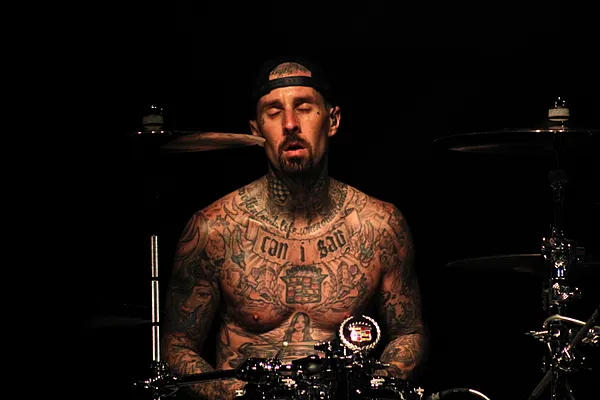
Punk Rock, the Aquabats, and Finding Blink-182
Barker’s path into the punk scene is appropriately chaotic. He plays in local bands, tours while living out of vans and cheap motel rooms. His stint with the Aquabats gets some attention, showing Barker as a working musician grinding it out long before fame enters the picture.
Then comes Blink-182.
"When I joined Blink, my first check from the band was for $3,000, which seemed like an enormous amount of money." - Travis Barker, Can I Say: Living Large, Cheating Death, and Drums, Drums, Drums (2016)
Barker joins the band, stepping in after original drummer Scott Raynor leaves mid-tour. What’s striking is how quickly Barker locks in—not just musically, but culturally. He brings a precision and versatility that transforms Blink from a scrappy punk band into something sharper, bigger, and more ambitious.
The book doesn’t rewrite history to make Barker the architect of Blink’s success, but it’s impossible to ignore how much his drumming elevates the band.
Fame, Excess, and Self-Destruction
As Blink-182 explodes, so does Barker’s lifestyle.
Barker is brutally honest about his addictions—prescription pills, painkillers and sex, Fame doesn’t just enable his worst impulses; it accelerates them.
"Late one night, one girl decided to put on a show for everyone. She stripped off her clothes, and then she stood on top of our glass table, banging herself with a bottle. She was getting excited, bumping and grinding—and then the table shattered underneath her. At first we all laughed, but then we realized it was serious. She was nude, and there was broken glass everywhere. Luckily, the bottle didn’t break inside her. It could have been really serious, but she was fine. After that night, we cooled everything down for a while." - Travis Barker, Can I Say: Living Large, Cheating Death, and Drums, Drums, Drums (2016)
There’s a compulsiveness to Barker’s behavior that runs throughout the book. He doesn’t dabble—he goes all in. Touring becomes nonstop. This becomes amplified once he is married to former Playboy model Shanna Moakler with their MTV reality show, Meet the Barkers.
Barker never glamorizes the destruction or pretend it was necessary for the art. He just lays it out plainly: this is what I did, this is who I hurt, and this is how close I came to losing everything—over and over again.
Plane Crash: Cheating Death for Real
The emotional center of Can I Say is the 2008 plane crash that nearly kills Barker and kills four others, including close friends.
The crash and its aftermath are described in stark, almost clinical detail. Barker’s burns are horrific. His recovery is long, painful, and psychologically devastating. For a man who has spent his life in motion—touring, flying, playing—the sudden confinement and trauma are unbearable.
He emerges damaged, terrified of flying, and forced to confront the reality that his lifestyle has consequences that don’t just affect him.
These chapters are some of the strongest in the book.
Love, Family, and the Limits of Redemption
Barker’s relationships—with partners, friends, and especially his children—form a quieter counterpoint to the chaos. He clearly loves deeply, but struggles to show up consistently.
Fatherhood grounds Barker in ways nothing else seems to. His devotion to his kids feels genuine and hard-earned. It’s one of the few areas where the book allows itself moments of real tenderness.
I found it interesting that this memoir included many short stories directly from his family, friends, band mates and ex-wives.
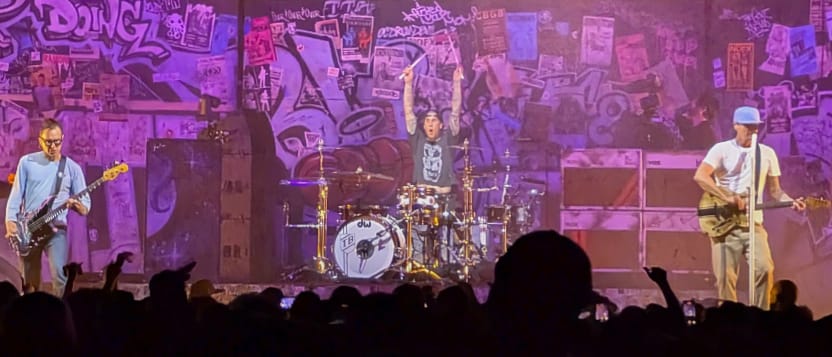
Drums, Drums, Drums
Can I Say never forgets the music and it always comes back to drums.
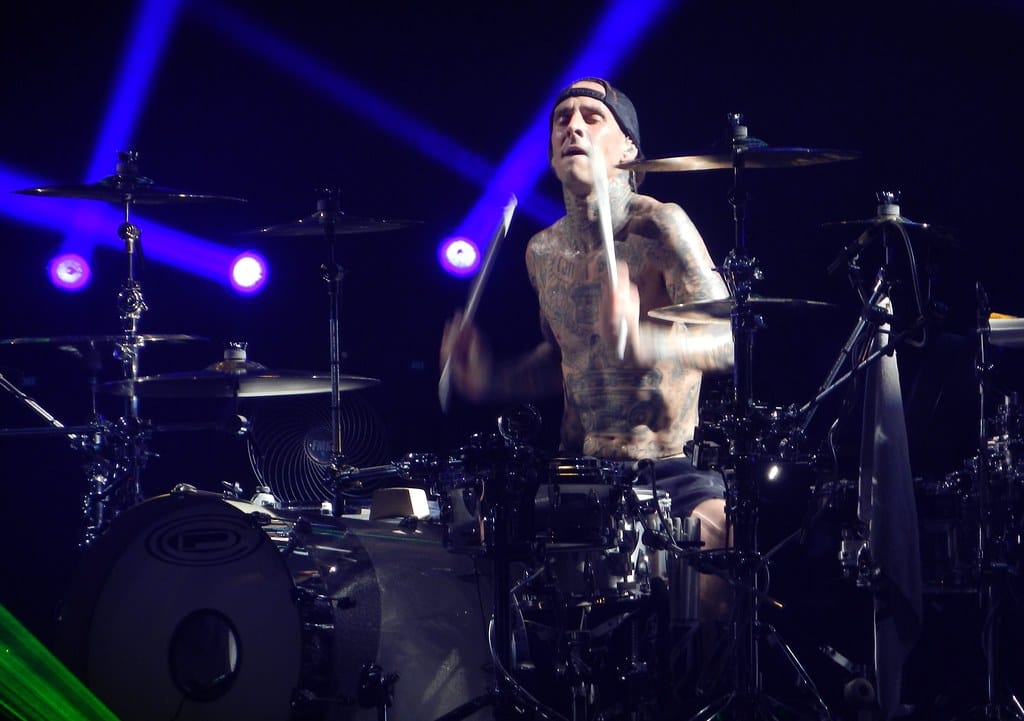
Barker’s love for drumming is infectious. He talks about technique, influences, practice routines, and the physicality of playing with real enthusiasm. His respect for hip-hop, jazz, and punk all sit side by side, explaining why his style feels so distinct.
"My number-one thing with other drummers is I want them to enjoy themselves. Dude, you’re a drummer—you’re the coolest one in the fucking band. Act like you love being there and give me a reason to watch you." - Travis Barker, Can I Say: Living Large, Cheating Death, and Drums, Drums, Drums (2016)
The Final Verdict
Can I Say is raw, messy, and occasionally exhausting. This isn’t a book about winning. It’s about surviving yourself long enough to keep playing.
Travis Barker comes across as a flawed, relentlessly driven artist who keeps choosing drums over everything else—even when it costs him dearly. The honesty is what elevates this memoir above many others in the genre.
If you’re interested in pop-punk history, modern drumming, or the psychological toll of fame, this book delivers.
3.5/5