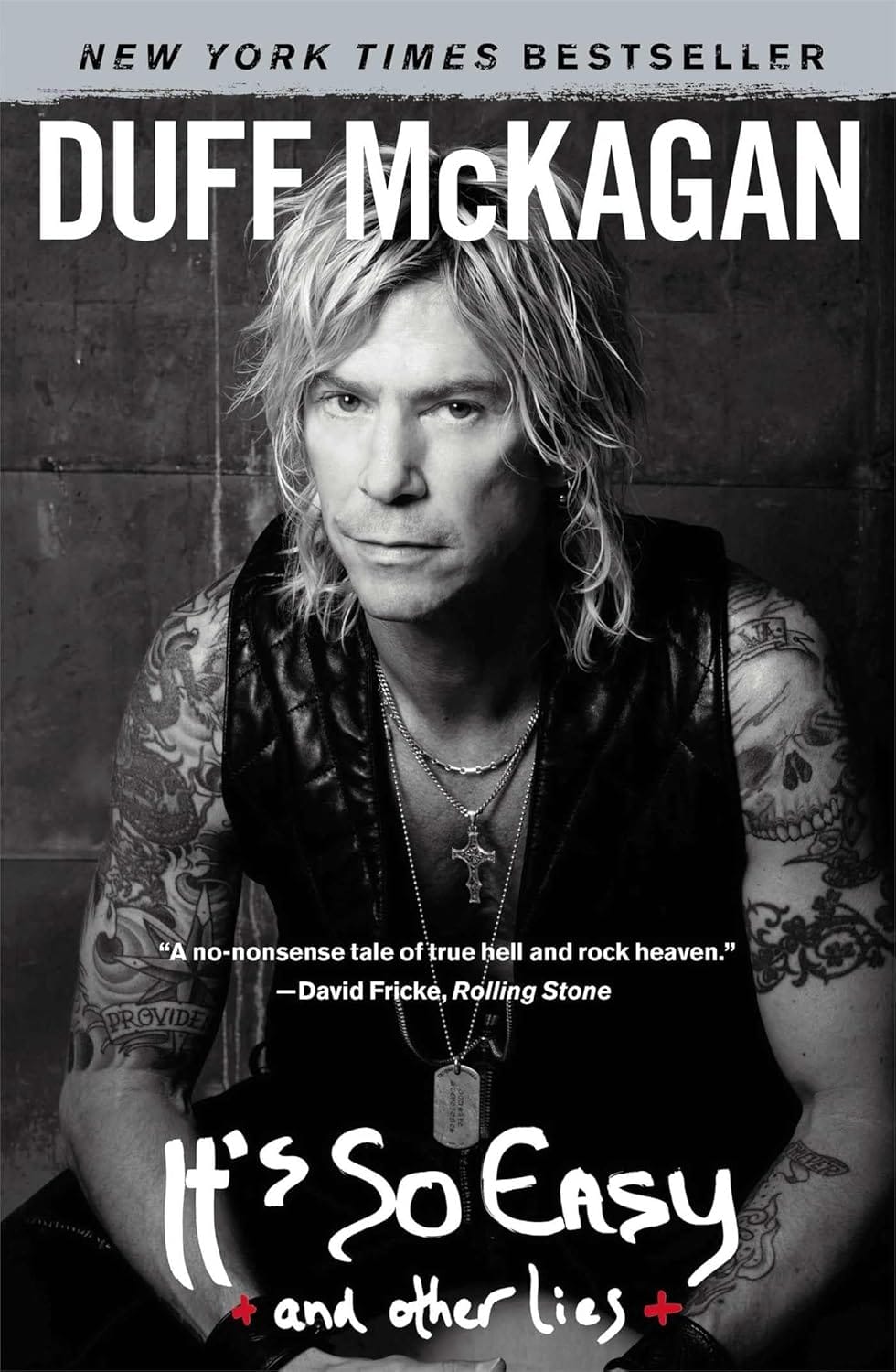
It’s So Easy (And Other Lies) (2011) Book Review - Duff McKagan on Surviving the Chaos of Guns N' Roses

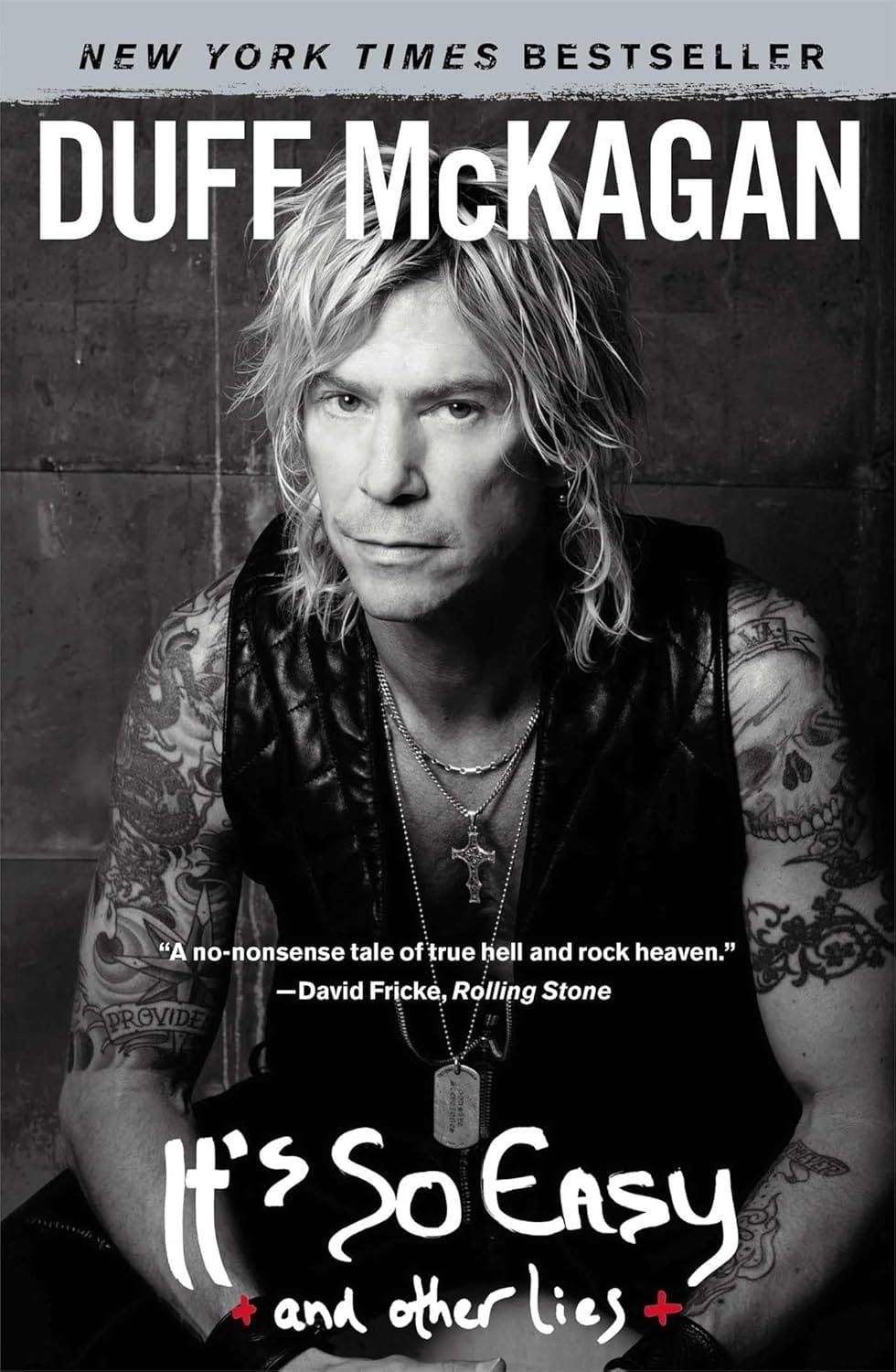
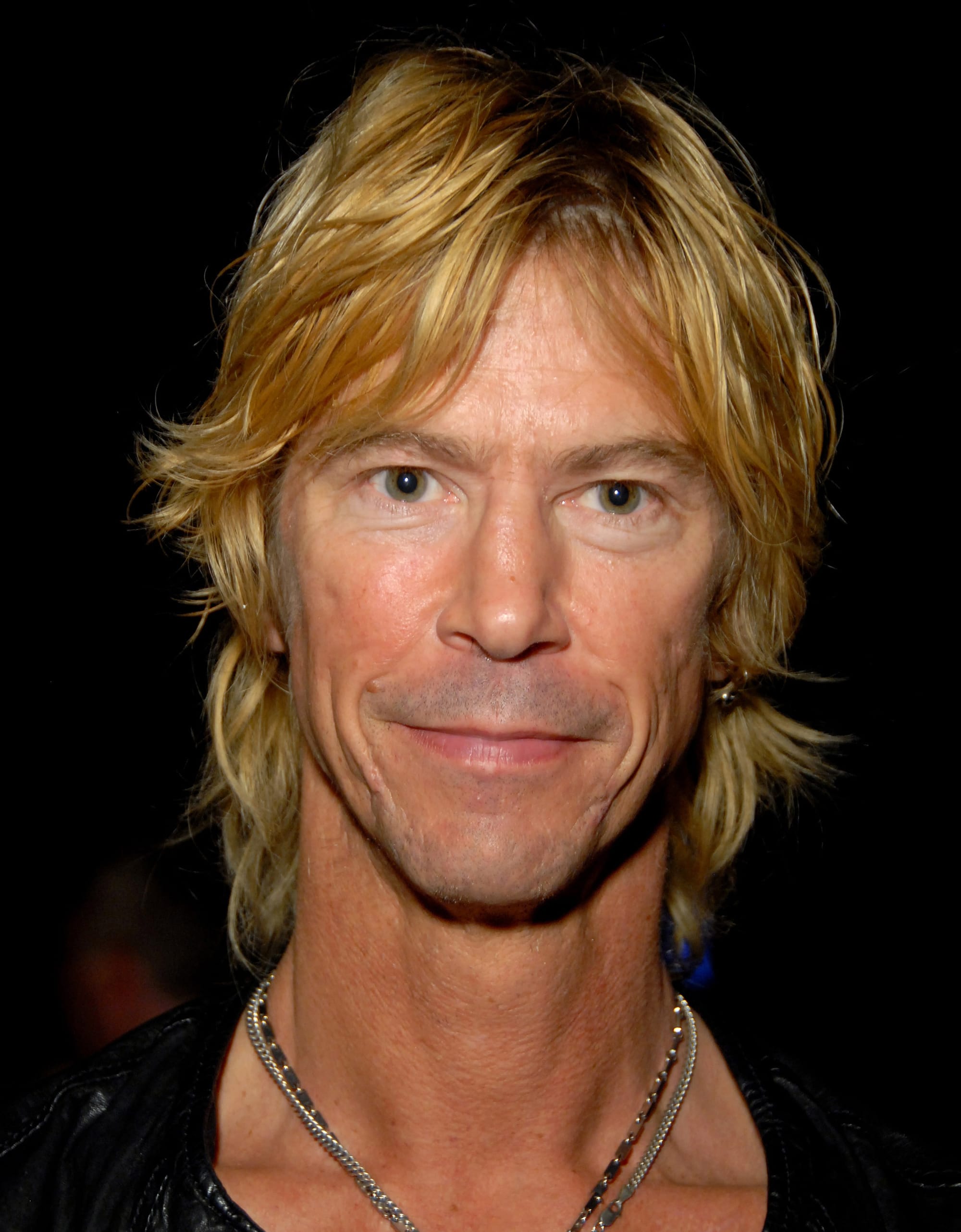
For fans who know McKagan primarily as the leather-jacketed bassist from Guns N' Roses, this memoir reveals a far more complex story than the standard rock-and-roll caricature.
Yes, the book contains plenty of the expected chaos: booze, fights, endless touring, and the combustible personalities that helped define late-1980s hard rock. But beneath that surface is a surprisingly reflective narrative about survival, identity, and learning how to live after nearly dying from the life you once celebrated.
The result is one of the more thoughtful rock autobiographies of the last few decades—raw, unfiltered, and surprisingly philosophical.
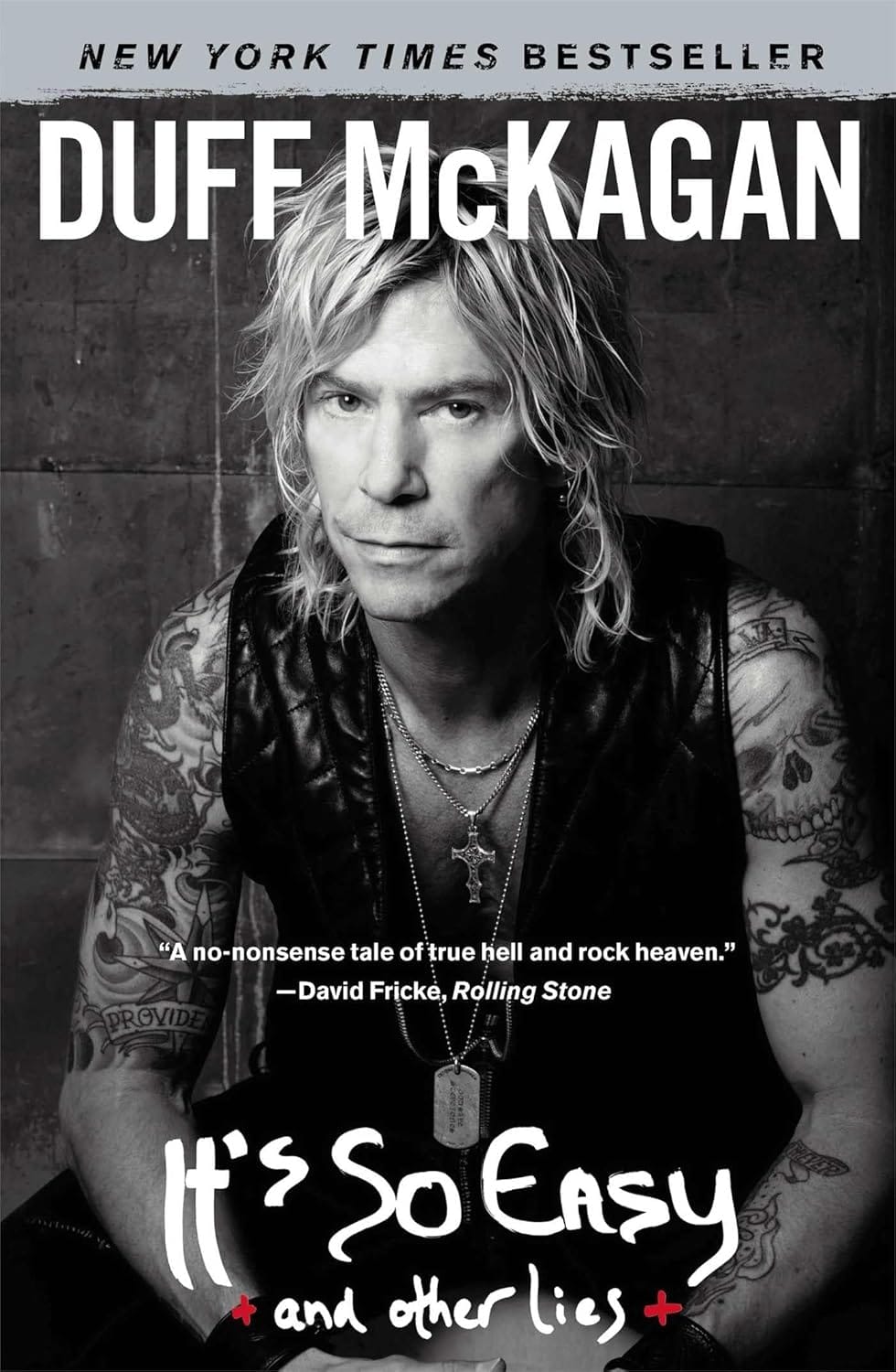
It’s So Easy (And Other Lies) (2011)
Growing Up Fast in the Pacific Northwest
Before the arenas and platinum records, McKagan’s story begins in the working-class neighborhoods of Seattle. Long before the city would become synonymous with the explosion of grunge in the early 1990s, it was already fertile ground for punk rock.
McKagan grew up in a large Irish Catholic family where music was always present, but stability wasn’t guaranteed. His early life reads like the classic formation story of many musicians: a restless kid searching for identity through music while navigating the rough edges of adolescence.
What stands out in these early chapters is how deeply McKagan was embedded in the Pacific Northwest punk scene. Bands, rehearsal spaces, cheap apartments, and late-night shows created a network of DIY culture that shaped his worldview long before fame entered the picture.

The Collision That Became Guns N’ Roses
When McKagan arrived in Los Angeles in the mid-1980s, the city was overflowing with bands chasing the same dream. Glam metal dominated the Sunset Strip, and dozens of musicians were trying to outdo each other with bigger hair, louder guitars, and more outrageous stage antics.
Then something different happened.
McKagan crossed paths with a group of musicians who were operating with a far more volatile energy: Axl Rose, Slash, and the rest of the lineup that would soon become Guns N’ Roses.
The chemistry was immediate and explosive.
"We all went back to Slash’s place—he was living with his mom. It was obvious even on the acoustic guitar he played that first night that Slash was a special player. I was absolutely stunned by the raw, emotive power he so easily tapped. Slash was already in a league of his own and watching him play guitar was a “holy shit” moment."
Unlike many retrospective rock memoirs that polish the mythology, McKagan describes the band’s formation with a mixture of awe and realism. The early days were chaotic, filled with cramped apartments, constant rehearsals, and a lifestyle that revolved around cheap alcohol and relentless ambition.
But the band had something that most others didn’t: authenticity.
When Appetite for Destruction arrived in 1987, it didn’t just succeed—it detonated. Songs like “Welcome to the Jungle,” “Paradise City,” and “Sweet Child O’ Mine” became cultural landmarks, reshaping the sound of mainstream rock.

Life Inside the Storm
Rock history often romanticizes the excess of the late 1980s, but McKagan’s account strips away much of that glamour. Touring with Guns N’ Roses during their peak meant living in a constant whirlwind of travel, media attention, internal band tensions, and substance abuse.
Alcohol, in particular, becomes a central character in the book.
"I quit coke that day and drank myself through two brutal weeks of serious depression.
Even though the effects of my drinking were more noticeable without the coke, drinking proved harder to rein in, much less kick."
McKagan writes with brutal honesty about the way drinking gradually shifted from social activity to daily necessity. What begins as part of the rock-and-roll lifestyle slowly becomes a dangerous dependency.
Sobriety and Reinvention
Many rock memoirs end their redemption arc with sobriety, but McKagan’s story becomes more interesting after that point.
Instead of simply staying alive, he reinvents himself.
Sobriety pushes him toward unexpected interests: fitness, martial arts, business, and eventually education. One of the most surprising elements of the book is McKagan’s decision to study finance—a path that ultimately leads him to become a financial columnist and entrepreneur.
But that’s part of the memoir’s deeper theme: identity isn’t fixed.
The Complicated Brotherhood of a Rock Band
Of course, any memoir connected to Guns N’ Roses inevitably touches on the band’s internal conflicts.
The tensions between band members, the fractures that eventually split the group apart, and the volatile personalities involved are all part of the story. McKagan doesn’t shy away from these moments.
He recognizes the creative brilliance that came from those relationships while acknowledging how destructive they could become. Fame, addiction, ego, and exhaustion created a pressure cooker environment where even small disagreements could spiral into major conflicts.
A Different Kind of Rock Memoir
One of the most refreshing aspects of It’s So Easy is its voice.
McKagan writes with a straightforward, conversational style that mirrors the rhythms of storytelling rather than literary flourish. The prose feels like sitting in a bar—or perhaps a quiet coffee shop—listening to someone recount the most unbelievable chapters of their life.
"On March 31, 1994, I went to LAX to catch a flight from L.A. to Seattle. Kurt Cobain was waiting to take the same flight. We started talking. He had just skipped out of a rehab facility. We were both fucked up. We ended up getting seats next to each other and talking the whole way, but we didn’t delve into certain things: I was in my hell and he was in his, and we both seemed to understand."
The Legacy of Survival
If there’s a central theme running through It’s So Easy, it’s survival.
Not just surviving fame, or addiction, or the music industry—but surviving your own worst instincts.
"After I totaled my car, I had to walk everywhere. Hollywood’s system of alleyways offered places to seal shady business deals, to hide out, or to pass out—and a lot of places for skeezy motherfuckers to come out of. Of course, now that we had our back-alley headquarters, we felt as though we were those motherfuckers. What could be skeezier than living in a storage space behind the Guitar Center?"
McKagan’s journey is ultimately about learning how to live after the chaos fades. Many musicians struggle with that transition once the adrenaline of touring and recording disappears.
“No, Mom, I’m okay, just a little tired,” I said. “I might be coming down with something.” Yeah, I was coming down from fucking crack."
Why the Book Still Matters
More than a decade after its publication, It’s So Easy (And Other Lies) remains one of the more thoughtful entries in the rock memoir genre.
Part of that is timing. By the time McKagan wrote the book, enough years had passed for reflection to replace reaction. He wasn’t trying to defend himself or rewrite history; he was simply telling the story as he experienced it.
"Soon after this, a production company working on a new animated series called me to ask if they could use the name “Duff” for a brand of beer in the show. I laughed and said of course, no problem. The whole thing sounded like a low-rent art project or something—I mean, who made cartoons for adults? Little did I know that the show would become The Simpsons and that within a few years I would start to see Duff beer glasses and gear everywhere we toured."

Final Thoughts
In the crowded landscape of rock memoirs, It’s So Easy (And Other Lies) stands out for its honesty and introspection.
It delivers the stories fans expect—wild tours, iconic albums, backstage chaos—but it also offers something deeper: a meditation on the cost of living too fast and the difficult process of slowing down.
For readers interested in the history of Guns N' Roses, the memoir provides invaluable firsthand insight into one of rock’s most explosive eras.
But even for those who aren’t die-hard fans, McKagan’s story resonates as a broader tale about resilience, maturity, and the possibility of rebuilding your life after everything falls apart.
Rating 4/5